Thirsty for information about Alaska Real Estate? Whether you're a home buyer, seller, investor, or just curious, we've got you covered! Comments and questions are welcomed!

April 17, 2018

Why Using A Listing Agent To Buy Might Not Be The Best Idea

Why Using A Listing Agent To Buy Might Not Be The Best Idea


            If you’re thinking about buying a home, but want to work with the “listing agent,” or licensee as we are called here in Alaska, you might want to reconsider.


            Zillow has taught me an important lesson through advertising with them – people think that using the listing agent might somehow benefit them.


I am about to dive into all the reasons why this will more than likely NOT work in your favor.


How The Listing Process Works & Commission

            When I work with a seller, we have a contract in place for our relationship. It covers various elements such as: my relationship to Mr. or Ms. Seller, what my duties are, how long I get to market the home, what the list price is, and yes, the commission. The commission when a home is marketed in the MLS is ALREADY DECIDED before anyone ever sees it.

            So if you think you’re going to work with the listing agent and reduce your purchase price by cutting out another agent, think again! The listing agent will receive the full commission as agreed in the original listing agreement. The only way to combat this is to write a purchase contract and write in that “The listing licensee to only receive the commission as designated in the ‘Exclusive Right to Sell’ for the listing licensee side.”

My main take away here is, you’re not saving yourself any commission monies by using the listing agent.

            If you do decide to go this route and include a purchase contract with that specific verbiage, you better know your way around a contract, because you are only getting specific assistance!


Real Estate Licensee (Agent) Relationships


            As standard for all MLS Purchase and Sales Agreements (purchase contracts), there are really only three designations for a licensee’s relationship and duties to the respective buying and/or selling parties (talking specifically about the listing agent here):

·      Licensee to represent Selling party only

·      Licensee to ASSIST both parties as a neutral licensee

·      Licensee to ASSIST Selling party without representation


Here’s the catch, if things were to come up in the court of law (and as good real estate professionals, we prepare for the worst by doing our best), as a listing licensee who was working for the Seller first, we are representing the Seller only, while giving the buyer specific assistance.

This means when you work with the listing licensee, you are waiving your right of representation. This literally means, that licensee’s duties to serve their client with the best of their abilities only lay in that of the Seller’s. You are literally waiving your right for representation. Not the best idea as it pertains to perhaps the LARGEST financial decision and investment of your life.


Inside Knowledge

            Here’s another common reason prospective home buyers want to use the listing agent – “They know more about the house.”

            While this certainly could be true if they’ve used that agent to buy the house, in most cases, it just isn’t true.

            I can tell you that I’ve sold homes for clients before that I’ve never stepped a foot into. Three things sell a house: price, condition and marketing. None of which does a licensee technically have to be present to ensure. As a listing licensee for my seller, I can long-gun the whole transaction with a team of people. That doesn’t mean I won’t do a tremendous job representing them and their interests, but it does mean that I might not know a whole lot about that house.

            I’ve had numerous phone calls to other agents asking if they know the configuration of the bedrooms (are the upstairs or downstairs), and they have no idea. No biggie in my opinion, I can go preview the house, but it does show what I’m talking about. Just because you listed the home or investment property, doesn’t mean you know a whole lot about it.

            A lot of times when we get a listing, we do an initial walk through, valuation based on current condition or work to be done, and then we hire out signs, photos and fliers. We even hire out open houses.

            Again, this doesn’t mean we don’t do a devastatingly great job, but it means our knowledge of the house isn’t by any means “inside information.”


real estate brokers of Alaska, Alaska real estate professionals, homes for sale in Anchorage, HERO realty group, top real estate agents in Anchorage, Alaska real estate

March 12, 2018

2018 Residential Tax Exemption Form

If you're living in your home, this is the form you need to file for your residential tax exemption.

Make sure it is in by March 15th, 2018 if you want to get the exemption on your taxes!

All information about qualification and what to do is on the form.


2018 residential tax form for anchorage alaska

Posted in Education
Sept. 23, 2016

Home Buying Process: Pre-Qualification

This blog series will be an 8 part discussion that will explain the basic steps to purchase a home here in Alaska.

After reading this series, you should have the basic understanding of what it takes, what is required from you, and all parties involved in the home purchasing process.

The first step to buying a house is to get pre-approved, or pre-qualified with a lender or banking company.

Why is this important? Looking for a house without pre-approval is like hunting without a working rifle. You don’t know how big you can go (purchase price), if you need to work on anything (credit, job length, etc.), or a slew of other factors that could prevent you from buying a house.

There are many different lenders who basically do that for you. My recommendation is typically to go with a local lender or a lender that offers a specific program that fits your needs and desires. For instance, if you’re going to use an FHA loan, most lenders can typically do the same interest rate, however, some may be able to offer you no origination fee, saving you thousands of dollars. If you want to purchase a foreclosure, you may need to get an FHA 203K loan, or use Alaska Housing Finance Corporation (AHFC) for their renovation loan.

If you don’t know what type of loan program you should use, consult a knowledgable licensed Real Estate agent to help you make an informed decision. Without knowing what you want to do, there is no clear path.

Four basic premises of pre-qualifcation are:

  1. satisfactory job history or length of employment
  2. verifiable income
  3. suitable DTI (debt-to-income ratio), and
  4. satisfactory credit score.

If you have had a job for the last two years, or have just gotten out of college and into a career position, 580 credit score or higher, you should be on your way to buying a home.

For more information, please contact our local Alaskan Realtor James Cash at 907-360-7448 or e-mail jamesfcash@gmail.com for more information.

Posted in Lending
June 21, 2016

How To Have A Better Conversation


Ok, so usually I just write about Anchorage Real Estate topics, but today I thought this topic was fitting. I have a lot of conversations with people, clients, friends and family. At times, I find it frustrating to enter into a conversation with some one who only wants to listen, or argue. These are my top 10 tips on how to have a great conversation! 

1. Don't multitaskMultitasking creates unnecessary distractions that make having a conversation awkward, and disconnected.

2. Don't pontificate"Everyone you'll ever meet knows something you don't."

3. Ask open-ended questionsStarting your questions with “why, what, how, when” rather than “yes” or “no” questions leads the conversations to areas it might not otherwise lead.

4. Go with the flowIf thoughts come into your mind, ask them. The fluidity of breath that this gives a conversation makes it just that - conversing.

5. If you don't know, say that you don't know.  Don’t pretend just for the sake of being agreeable or looking ignorant.

6. Don't equate your experience with theirs.  "If you're having trouble at work, or lost a loved one, don't bring up your experience. Empathize. It's not about you."

7. Try not to repeat yourself. "It's boring and condescending.” If you have a valid point, bringing it up once is enough!

8. Stay out of the weeds. "Names, dates and details are unimportant. They care about you, not the deets."

9. Listen - the most important skill.  Buddha said, “If your mouth is open, you're not learning."

·       “Most people do not listen with the intent to understand; they listen with the intent to reply.” – Steven Covey

10. Be brief.  "A good conversation is like a miniskirt, short enough to retain interest, but long enough to cover the subject.”  If there are quotes, just extrapolate on them. If it’s a bullet point, try to write it out.


Posted in Education
June 3, 2016

What is a short sale?

The Secret to Short Sales!


If you're looking to get a "deal" on a real estate in Anchorage, Eagle River or Wasilla and Palmer, you've probably seen screaming deals advertised as a short sale. In today's blog post, we'll discover exactly what a short sale is, the process by which it happens, and how you can get one of those screaming home deals!


A short sale is typically granted by a bank for two main reasons: the seller has endured a recent hardship and is unable to make mortgage payments and/or there is not enough equity in the home for a straight sale to pay off the entirety of the mortgage.


Some examples of a seller hardship may include: reduced income, unemployment, economic hardships, divorce, death, personal and medical emergencies, unforeseen issues with the home resulting in large bills.


The seller, after being left with no option, must present a short sale packet to the bank identifying their hardship and also giving their approval for a short sale to happen. Why would they do this? Often times the only alternative is a foreclosure, which could have a much larger impact on their life (most importantly, credit) than a short sale.


Now that we know what a short sale is, how can you get one? Can just anyone get a short sale for that oh so precious instant equity? Well, the right answer is: it depends.


Depending on the shape of the home, it may be financeable through common conventional means (FHA or VA financing). Due to FHA and VA regulations, the terms on which they will provide financing for a home depends largely on the shape it's in. To simplify the idea of this, the home needs to be in a good “livable” condition, and will need to comply with the standards of a home appraisal.


If the home needs work, such as a new heating system or a new roof, there are some alternative financing programs. These include the FHA 203k program and other rehab loans (click here for more information on local rehab loans).


Beyond this, if you are a seasoned investor or property flipper, you may have an existing relationship with a bank that will give you either a conventional loan, personal line of credit (PLOC), or portfolio lending based on your economic conditions and past experience.


Lastly, if the property is in rough shape and financing is not an option, cash is always king! This means you will have to pay in secured funds (cash or cashing out an IRA for example) for the property. The good news here is you can get an ample discount at times if you do use cash.


If you are dead set on acquiring a property that is in rough shape, it cannot be financed, and you do not have cash, there are always Hard Money Lenders that may be willing to help you out. This is a topic for another time, but if you're a motivated individual who can commit to a solid game plan, this could be a route for you!


So there you have it! We now know what a short sale is, and how to get one. Now that you know, click here to start finding those deals!

For more information, please call our local Real Estate Expert James Cash at 907-360-7448 or e-mail at jamesfcash@gmail.com

Posted in Education
May 27, 2016

Do Realtors Get Paid Too Much?

Anchorage Realtor For Sale Sign 

            That’s a solid maybe. If you’ve seen recent Hollywood movies like “The Big Short” where air-headed Realtors converse over cocktails lavishly laughing about how much money they make without a clue how the game is played, you probably have a bad representation of us.

            There’s also the real-life version, driving around in a brand new Audi or Mercedes, who don’t seem to know how to tie their own shoes. This exists even in our great state of Alaska!

            While these examples of fictitious and real-life personas do exist, do they really get paid too much?


What Is Their Job?

            A discussion we should have first is: What is their job? Typically, it is to represent a homebuyer or home-seller in the process of buying and selling homes. This is where the term “Buyer’s Agent” and “Listing Agent” come from.

            It is notable to mention that typically, a normal person’s biggest purchase in their lives will be real estate related. It would then only make sense that some of the biggest commissions to be collected in a sales job would come from real estate.

            Let’s dissect this a little further though. We know what their job is, but really, what do they do for all that money?

Buyer’s Agent

            This is the guy or gal that is helping you buy your first home, or your next investment property. Their sole duty is to represent you as a buyer during the process of closing a prospective home. This can also be more time consuming than representing a seller. Typically, the process goes like this:

·      Identifying a property that fits your specific criteria, including:

o   Performing CMA’s to make sure the property is priced appropriately

o   Performing cost analysis sheets if the property is an investment

o   Performing projected gross and net proceeds if the property is a flip

o   Finding the best neighborhood based off of your specific needs

·      Help identify specific loan programs that are best for your specific needs

·      Doing their homework based on market knowledge to form an offer

·      Presenting the offer in the most appealing fashion, and negotiating:

o   Closing Costs, Terms, Repairs

·      Connecting you with Home Inspectors and Contractors who are the best in their field for the prospective property

·      Connecting you with legitimate title companies

·      Making sure all parties of the transaction abide to strict timelines and deadlines as to not delay closing

Basically, if your buyer’s agent is doing their job, you say, “I want this property, make it happen” while you sit back and they guide you for every step. If your Agent is not doing this, you’ve picked the wrong one.


Seller’s Agent

            This is the individual who helps you sell your home. Their sole duty is to price, market, and negotiate the sale of your home. This can be a harder task than being a Buyer’s Agent depending on the market, and it most likely will result in a direct cost to them (through marketing and advertising). How do you know if your Realtor is doing a good job? They should be doing the following:

·      Appear professional in your first introduction or interviews and well established in their market knowledge and abilities

·      Adequately present you with CMA’s (comps) for your property to indicate they have found the HIGHEST price for your home that will still let it be competitive on the market (overpriced homes don’t sell)

·      Market your home, including:

o   Professional Photos

o   Flyers

o   Signage

o   Internet Marketing

o   Direct Mail Marketing

o   Lead Capture of prospective buyers

o   Open Houses (though studies show these aren’t that effective)

·      Easy accessibility for ALL PARTIES (if your Realtor doesn’t answer their phone for you, will they answer for an eager buyer ready to write an offer?”

·      Knowledge and use of technology, including: Microsoft Office, Social Media Platforms, MLS systems, Website monitoring, Client Monitoring and integrated calendar scheduling

·      Firmly negotiating incoming offers with your best interest in mind

·      Keeping you up to date with the market

·      Keeping you up to date and on timelines for the transaction

·      Knowing what to watch out for during your transaction (weak offers, weak lenders, weak buyers, potential downsides to offers and contractors or companies to avoid, etc.)

If your Realtor is not doing ALL of the following, you may have chosen the wrong one!


What’s The Verdict?


            Poor performing Realtors are definitely overpaid! Whether they have a big name and do volume just because they can, or they are just starting out, you can definitely over pay for a poor service.

            If you’re Realtor is on point with their Reaxl Estate game, you’re not over paying at all. I can tell you from personal experience; I have experienced more joy and more stress in Real Estate than anything else I’ve ever done in my life. My phone is almost never off, and I try to be accessible at all times for the convenience of my clients while maintain a family life. 5AM phone calls, and showings at 7PM on a Sunday are the easy busy-work tasks that a solid Realtor has to deal with.

            Before you choose to hire a realtor, ask them the tough questions before handing them over their commission. Make them work for it, but be polite. Interview multiple candidates for the job until you’re confident you’ve found the right help!


If you’re looking for a local Realtor to assist you with buying or selling in Anchorage, Eagle River or Wasilla and Palmer, call or text James Cash today at (907)-360-7448 or e-mail at jamesfcash@gmail.com

Posted in Education
May 13, 2016

Why using a Realtor is amazing!

Why using a Realtor is amazing!


            Have you ever wondered why some people use a Realtor / Agent and some people shy away from it? Have you also wondered why we just don’t use lawyers? These are all great questions that we will answer in today’s blog.

properties of alaska smiley

            Firstly, let’s get a couple of key fundamentals out of the way. In Alaska, a person who is licensed to assist in the sale of Real Property (AKA Real Estate) is called a Licensee, not an Agent. This had to do with some legal semantics about labeling and advertising, but for all intents and purposes, please call us whatever makes you feel best! Agent does sound cool though!


realtor license            Secondly, not all Real Estate professionals in the state of Alaska are “Realtors.” Realtors are a group of licensed individuals who are upheld to a higher level of ethics and standards. Becoming a realtor requires additional fees and certifications (including continuing education hours) that set them apart from others. I think about this like I do Personal Trainers in the fitness industry. Anyone can go online and get some cookie cutter, low-level certification. Then there are those who have to graduate college with a 4-year degree in order to get their certifications. Obviously with a higher standard of certification usually comes a higher level of knowledge, service and commitment to the profession.

(P.S. I am a firm believer that there are amazing Real Estate professionals who are not Realtors even though I am a licensed Realtor.)


            If you’ve watched movies like “The Big Short” or have succumbed to the stereotypical image of a flashy salesperson stumbling out of their Audi draped in Gucci sunglasses while just getting off of their Bluetooth, you may be getting the wrong image.

            Just like with any profession, whether a doctor, lawyer or dentist, there are people who fit the bill of a Hollywood heel. For the most part, in my experience, Realtors in Alaska are normal people living normal lives who care more about people than money. I think it is very easy for a person to stereotype some one who is professional that obviously looks and dresses the part. Would you hire a doctor who’s about to do heart surgery that rolls up to your consultation in a rusted Toyota? Or would you go with the suit and tie doctor driving up in his luxury car, with whom you’ve only talked to his assistant at this point? Probably the professional who has made hard work, through his expertise, let him make a good life for himself.


            Typically, Realtors (Agents) are classified into two categories. There are Buyer’s Agents, and Sellers Agents (commonly referred to as a Listing Agent).

            Buyer’s Agents typically represent the prospective buyer of a property. Seller’s Agents typically represent the seller on a prospective piece of property or home.

            It is important to note that in the State of Alaska a Real Estate Professional can be dual-licensees. This means that he or she can represent both the buyer and seller. In some states this is illegal because it is very hard to represent both parties fairly and adequately with fair, and equal representation. If you’re looking at a specific piece of property, I would ask your Realtor if he or she is also the listing agent. You might want to consider getting representation for your side of the deal specifically. Why?

ethics            A Seller’s Agent is representing the seller’s best interest, and has most likely established that relationship before yours (relationships are important in any type of legal transaction). The seller’s best interest is to get the most amount of money for their property on the best terms possible. Re-read that last sentence and consider it before you think about using a Realtor as a dual-licensee.

            It is a Buyer’s Agent sole responsibility to find their client a conforming piece of property or home, that falls in line with their ideals, needs and wants and obtain it for the lowest price, on the terms that best suit the buyer.

            The cool thing about using a buyer’s Agent is that typically all the commissions paid out is from the Seller’s side of things. This means that using an Agent as a Buying Agent is free to you!


Why don’t people just use lawyers?

real estate gavelLawyers usually work off of an hourly rate (anywhere from $175-$400 an hour), and they do not have as much access to real estate information that licensed Real Estate Professionals do. Typically in a very large deal, Real Estate Lawyers can be brought in to provide specific assistance.


Why use an agent at all?

            That’s’ a very good question, and one that has a solid answer. A lot of people try to do what’s called “For Sale By Owner.” This is where they cut out the middle-man and try to work directly with a buyer in attempt to save themselves money.

            While, in theory, this sounds like a very good money saving effort, there are major issues with it. Unless a person is very familiar with land and home contract laws, specifically in that state, it can get messy. There is a reason why states have locally licensed individuals to take care of things like stock trading, real estate and legal practices. Very intricate laws mixed with confusing contracts can hold a homeowner to a lot of liability.

properties of alaska dollar sign            Just because you claim, “I didn’t know,” it won’t help you out. If you make a mistake because you did not know what you’re doing, it could cost you thousands of dollars, not to mention legal ramifications that result in fines, and even jail time.


These are just a few of the reasons why using a local Realtor in Alaska could benefit you big time! They have your best interest in mind and can save you thousands of dollars and maybe even save you from making some bad Real Estate deicions!


Interested in working with a local Realtor? Contact James Cash at 907-360-7448 or jamesfcash@gmail.com

Posted in Education
April 19, 2016

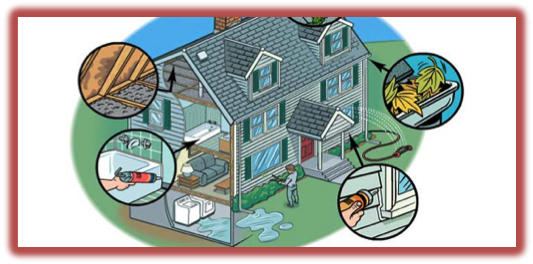
Yearly Home Maintenance In Alaska

Yearly Home Maintenance in Alaska

If you're a fellow homeowner, investment property owner or property manager, you probably know all about unexpected expenses in regards to property maintenance. In this blog, let's look at a short list of some simple things we should be doing yearly to keep deferred maintenance a thing of the past.


Roof Maintenance

picture of home roofMost Alaskan homes are asphalt composition shingle roof. Mixed with out many trees of various genus’s, especially birch trees with floating leaves, we tend to collect a good portion of falls short-lived foliage on our roofs. It's important to clean them yearly at the end of fall, paying close attention to moss build up. Also remember, it is better to gently scrape asphalt shingle (if there is gunk build up) than it is to pressure wash, as pressure washing will greatly deteriorate the lifespan of your shingles.

Also, let’s not forget about our roofs in the wintertime. Did it snow more than 12 inches in 24 hours? Or is it really heavy, wet snow? SHOVEL IT! Or pay someone to shovel it. Trust us on this one.


Gutter Maintenance

Yes, this is a separate section of maintenance from the roof. Make sure your gutters are scraped clean and free from any blockage, preferably at the start of the first snow. By Anchorage's first snow, most leaves should have fallen and you're clear to clean them for the winter.


Heating System Inspection

murphys law house furnaceEvery landlord will tell you, heating and plumbing issues are the worst. They often arise when it's most inconvenience and bring the highest cost to homeowners for repairs. Avoid this slippery slope by getting your heating system and boiler inspected every year by a trusted heating or mechanical company. Inspections are relatively cheap, and help establish a working relationship with a company or handy man that knows your system.


Grounds Maintenance

don't do this to your alaska homeProbably one of the least fun things on the list - pick up your garbage. I prefer to do this twice a year at least. One at the end of break-up (when the snow and ice first melts), then again right before the first snow. This will help keep your property pristine giving it that curb appeal that gives you pride of ownership in your home. If you skip out on this step, especially before winter, your spring will look like a dumping ground for all of Anchorage!


Crawl Space

Once a year, it's important to inspect your crawl space. Yes, you'll have to brave yourself against claustrophobia and arachnophobia. Don't worry though, inspection of crawl spaces rarely leads to a paramount of a JRR Tolkien book - you'll be fine! Look for random leaks, foundational issues, drainage issues on the exterior of the building and possible infestations. Brave going down into the crawl space once a year and you'll be glad you did!


Exterior maintenance

anchorage home exterior maintenance infographicUnless you're doing a major overhaul, there isn't much to exterior maintenance. Look for loose siding, chipping paint and small imperfections to your buildings' exterior that could worsen over time. Take care of what you can with well-done cover jobs, and hire it out if you can't do it well. I've seen loose side boards lead to wood rot that cost a lot of money to fix. Don't let a small exterior issue turn into a contractor’s gold mine.


There you have it! Follow these easy steps to secure and maintain your building for the best long-term results. I'm a huge fan of the saying, "Pay today, or pay tomorrow."


Now you know what you should be doing, turn your "shoulds" into "musts" and you'll avoid big headaches later in your properties life.

For more informations, or if you have questions about Real Esate in Anchorage, Alaska, please contact our local Realtor James Cash at (907)-360-7448 or e-mail at jamesfcash@gmail.com

Posted in Education, How To
April 17, 2016

Why A Fourplex Could Be Your Best Investment

Why A Fourplex Could Be Your Best Investment

Investment anchorage real estate fourplex investing


            In this day and age, there is always speculation what is the best investment. On one side of the coin, wall street is telling us that diversification of our portfolio over many blue chip stocks is our best bet. The government tells us investing in treasury bonds is a sure way to beat inflation and a safeguard for our money. Then there are realtors like myself who are advocating for investing in real estate. But who’s right?


            The truth is, all of us. Depending on your financial goals and the amount of assumed risk you want to carry, any one of these options could be great for you. Personally, I got tired of riding the stock waves years ago and cashed out on the upswing by sheer luck. Many of us were not so lucky. I entered the Anchorage Real Estate market not to purchase my first home, but to invest.


            Following Robert Kiyosaki’s (author of Rich Dad Poor Dad) model of the “Wealth Building Phase,” I knew that working my corporate job I had to be highly leveraged just starting out in order to create some sort of financial future for myself. I was hard pressed just to save any sum of money every month after my bills were paid. At that time, I lucked into investing because I heard some older gentleman tell me to, “Buy a fourplex and live in it until you’re tired of it, then buy another one.”


            I didn’t know that his words carried such wisdom. He was a man I respected and knew he had done well for himself. He was by no means the next Donald Trump or Warren Buffet, but he was not a poor man by any stretch of the imagination. In that one sentence, he ignited my passion in real estate and my mindset shifted. Those words changed my life.


Why Is Investing In A Fourplex So Great?


Rent Free

            Aside from being the king or queen of the quarters (if you have a coin-op laundry, you get to collect a kings ransom in arcade funding every month), it enables you to live very cheap. You get to rent out 75% of the units, and can even live rent-free while some one else pays your mortgage. Even if you’re not living entirely rent free, you’re monthly payment to live in a roof-covered-sleeping-place is very low. This enables you to save your money, or pour it back into your investment.


Highly Leveraged

            For an FHA loan, you only have to put 3.5% down to get into that property (VA loan – Veterans/Military – is 0%). That’s crazy! In 30 years, you could control half a million dollars in Real Estate by putting down only $17,500! Ok – things will eventually go wrong and you’ll have to put more capital into the building so it doesn’t fall apart, but a man can dream! Even with capital expenses and regular upkeep, your investment and ROI (return on investment) is insane. Not to mention, in 30 years, your building will most likely inflate beyond the initial purchase price.

Inflation or Deflation – Who Cares?

            When you invest in treasure bonds, or even stocks for that matter, it can be a race against inflation. With the unregulated printing of U.S. Dollars by the federal reserve, exacerbated by the greed of the government to deficit spend, inflation is a very real threat against protecting your assets. Being so HIGHLY leveraged, you really don’t have to care about inflation, or even deflation for that matter – or a combination of both.  I like to use the following example:


Lets say the U.S. Dollar is worth $1 (One Dollar).


You Purchase a home for $100,000. You buy it with an FHA loan, at 3.5% down, investing only $3,500.


Printing U.S. Dollars unregulated inflates the actual cost of goods and commodities, therefor prices of everything goes up, even your home.


Due to this, your home is now worth $200,000 in 30 years.


The Actual Value of a U.S. Dollar is now worth $0.50 (50 Cents). This is because inflation of prices deflated the value of the dollar. Example: They say an ounce of gold has always bought a nice mens’ designer suite. In 1930 that may have been $20 – the price of an ounce of gold. Today, it may cost around $1,300. Prices of goods have inflated, and the true value of a dollar has gone down (deflated).


The Actual Relative Value of your home, in comparison with when you bought it, is $50,000. (Sad I know).


You only spent $3,500 and have made it grow by 1,423%. You’ve managed to leverage your money, and even in the worst conditions of economic management by our governing bodies, you beat the system. Congratulations!


A Roofed Stepping Stone

            I tell people live like you are still renting when you move out of your fourplex, and don’t take any income from it. Pretend it’s not there – it’s your magical investment in a far away place where you can’t harm it’s money making potential!

            Some day, when you decide you want to move into other endeavors, opening your own business, or getting into more Real Estate investing, you have a little nest egg you can leverage. Take out a HELOC (Home Equity Line Of Credit) to play around with, or sell it and 1031 Tax Exchange into a bigger, better cash-flowing commercial property. The possibilities are really endless.

P.S. You could also buy a fourplex when your kid is 1-5 years old and tuck it away so it pays for their college, and they have a place to stay when they graduate and decide not to work!


Tax Benefits

            The tax benefits of home ownership are real. The tax benefits of owning a fourplex are even more real! Interest, depreciation, repairs, legal and professional services just to name a few! I don’t claim to be a CPA, so don’t ask me the specifics here. Ask your accountant about all the amazing things your fourplex can tax shield you from!


These are not all of the amazing things a fourplex can do for you, just scratching the surface. Don’t think you only have to go big. Start with a duplex if that’s your comfort level (though they don’t cash flow as well and are a quasi-investment). Don’t take my word for it, just do some research of your own and you’ll soon see the benefits.


For more information about fourplexes, investment properties, multifamily properties or Real Estate in Alaska, contact our local expert James Cash at (907)-360-7448 or jamesfcash@gmail.com


April 7, 2016

How To Raise Your Credit Score For A Home Loan

How To Raise Your Credit Score For A Home Loan


If you've ever been denied for a home loan, or dream of owning your own home but can’t due to lower credit, I can sympathize with you. Rest assured, there is hope! In this blog post we will go over the best and fastest ways to raise your credit to an acceptable level to obtain your very first home loan!


If you haven't read our blog post yet on "What is my credit score?" click here to take a look. 


            THE BASIC WAYS TO RAISE YOUR CREDIT FAST

Briefly, these are a few ways to increase your credit quickly, and dramatically. We will cover these in depth:

·      PAY OFF COLLECTIONS

·      BRING ACCOUNTS CURRENT

·      GET A SECURED CREDIT CARD

·      LOWER DTI

·      CONSOLIDATE DEBT

·      OPEN REVOLVING ACCOUNTS IF NONE EXIST

Before you begin, you should obtain a copy of your credit report.


PAY OFF COLLECTIONS

        If you have not paid a company, medical bill, credit cards, or stopped paying a revolving debt, you might have a collection. Follow these easy steps to take control and wipe these collections off of your account. 

1.) Review a copy of your credit report

2.) Work with the companies directly and not the collections company. Again, do not work with the collection agency! Why? After you pay a collections company, they will not remove this from your credit report for seven years (unless it was proven to be fraudulent).

3.) Make sure each companies puts it in writing they will remove this account from showing up on your credit report and ask the collection company to remove it from their file. 


BRING ACCOUNTS CURRENT

If you have any late accounts open, bring them current immediately or contact the company to have them assist you in your late payments. You may be able to set up a payment plan without reporting you to a collection agency or credit bureau. You will be surprised how many companies will work with you if you tell them your situation. 


GET A SECURED CREDIT CARD

A secured credit card works like a normal credit card, except you have to put the money down up front. For example, if you give your bank $500, they will give you a $500 secured credit card. After a year of using this, paying on time and not keeping the card maxed out; they will normally refund you the $500 and increase your credit limit. Pro Tip: leave the balance on this card very low - this will help push your credit limit and credit score higher. 


LOWER DTI (DEBT TO INCOME)

If you have a lot of revolving debt, like credit cards, lines of credit or car loans, pay them down! After you've run your credit report, you can see where your DTI is. Typically under 35% will yield an ideal credit score. Pro Tip - don't push this too low, as credit bureaus like to see a prospective client using credit responsibly. 


CONSOLIDATE DEBT

If you have high interest credit cards or student loans, you can consolidate debt into one place. Typically these are shown as a personal line of credit (revolving account) and may have a lower interest rate. I've had clients open these and consolidate their debt and see immediate increases to their credit score.


OPEN REVOLVING ACCOUNTS – If You Don’t Have Any Yet

If you don't have any revolving accounts, like credit cards, lines of credit or a car loan, your credit score may be low because there is no history. Open a secured card, or try to open a normal credit card. The new revolving accounts and available credit will help boost your score. Be careful not to open any of these too close to applying for a loan as this could be an issue for mortgage lending companies.


There's a lot of moving pieces here, but if you follow this guide and the steps within, you'll most likely be within 6 months of obtaining a home loan. 


P. S. If you're struggling to come up with the money to pay down debt, consider working a second job. If you're committed to buying a home, you may have to make some initial sacrifices! 

Posted in Education, How To