Thirsty for information about Alaska Real Estate? Whether you're a home buyer, seller, investor, or just curious, we've got you covered! Comments and questions are welcomed!

May 18, 2026

Palmer Alehouse: Why Palmer’s Small-Town Restaurant Scene Is Better Than People Expect

Palmer Alaska Lifestyle

Palmer Alehouse: Why Palmer’s Small-Town Restaurant Scene Is Better Than People Expect

Great food, local beer, mountain views, live music, and authentic Alaska atmosphere — Palmer Alehouse is one of those places that reminds you why people fall in love with Palmer, Alaska.

Situated in the lovely, charming, and little town of Palmer, Alaska, lies the best spot you have either never been to… or always go to if you are a local.

Palmer Alehouse is one of those places that somehow manages to feel like both a local hangout and a destination at the same time. From the backdrop of mountains ripping out of the earth trying to touch the Alaskan sky, to the creaky wooden floors right when you walk in, the atmosphere feels unapologetically Alaska.

And honestly, that is part of what makes Palmer itself so special.

There is something refreshing about places that still feel authentic. Not over-designed. Not trying too hard. Just genuinely good food, good people, good views, and a community atmosphere that feels difficult to replicate in larger cities.

Palmer Alehouse captures that feeling perfectly.

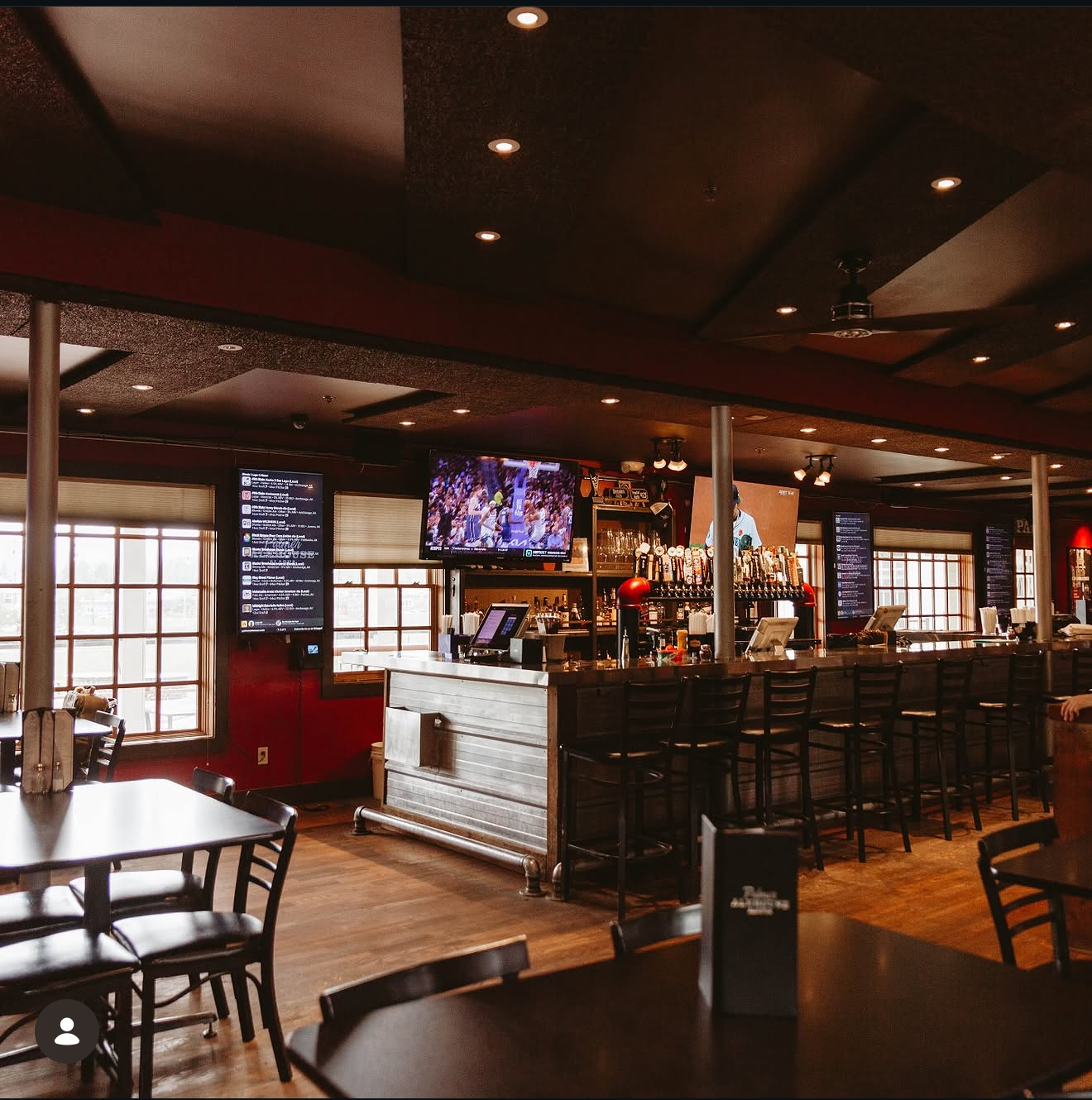
Interior of Palmer Alehouse in Palmer Alaska
Warm lighting, local atmosphere, sports on TV, cold beer, and authentic Alaska energy — Palmer Alehouse feels like the kind of place you instantly settle into.
Local Beer & Alaska Vibes

A Strong Tap List Is Basically Mandatory In Alaska

Let’s address the important topic immediately: yes, they have beer on tap. And not just random filler beer either — Palmer Alehouse usually carries a strong lineup of local and Alaska craft brews.

Which, frankly, is exactly how it should be.

Alaska has some incredibly good breweries, and Palmer Alehouse leans into that local feel instead of pretending imported cucumber-water pilsners from somewhere called “Upper Coastal Meadow Brewery” are the pinnacle of civilization.

And listen… if you are not an IPA fan, I am not saying we cannot be friends. I am just saying I may quietly question your life choices while respectfully nodding.

Jokes aside, the beer selection is one of the things that makes the place feel genuinely local. Whether you are stopping in after hiking Hatcher Pass, meeting friends for dinner, or grabbing food after work, there is something very Alaska about sitting down with a local brew while mountains loom outside the windows like they own the place.

Simple Food Done Right

One thing Palmer Alehouse does well is avoiding the trap a lot of restaurants fall into:

trying to do too much.

Their menu is relatively straightforward, but honestly, that is part of the charm. Burgers. Pizza. Wings. Sandwiches. Salads. Comfort food that actually sounds good after a long Alaska day instead of tiny artistic portions arranged like a modern art project.

And somehow, despite being known for burgers and beer, they also have a genuinely solid Caesar salad.

Which feels worth mentioning because sometimes restaurant Caesar salads taste like someone emotionally gave up halfway through making them.

Palmer Alehouse manages to strike a balance that a lot of places miss:

  • simple without feeling boring
  • comfortable without feeling cheap
  • casual without sacrificing quality
  • local without trying too hard to look “rustic”

It is the kind of place where almost everybody can find something they want, which honestly makes it one of the better group dinner spots in Palmer.

Food and beer at Palmer Alehouse in Palmer Alaska
Great burgers, sandwiches, fries, local beer, and genuinely satisfying comfort food make Palmer Alehouse a favorite local stop.
More Than Just A Restaurant

Concerts, Events & Outdoor Seating

Another reason locals love Palmer Alehouse is because it feels tied into the actual community instead of simply existing inside it.

They frequently host live music and concerts, especially during the warmer months, and they also have outdoor seating that works incredibly well during Alaska summers when everybody suddenly remembers sunlight exists again and refuses to go indoors for several months.

The outdoor atmosphere during summer evenings is genuinely hard to beat. Long daylight hours, mountain views, cool air, local beer, food, music, and friends sitting outside talking while the sun somehow still refuses to set at 10:30 PM.

It is one of those experiences that quietly reminds you why people fall in love with Alaska.

Palmer Alehouse also has upstairs event hosting space, making it a popular option for:

  • private events
  • community gatherings
  • birthday parties
  • meetings
  • celebrations
  • group dinners

In smaller communities, places like this become more than restaurants. They become gathering places. And honestly, that sense of community is one of the underrated benefits of living in Palmer.

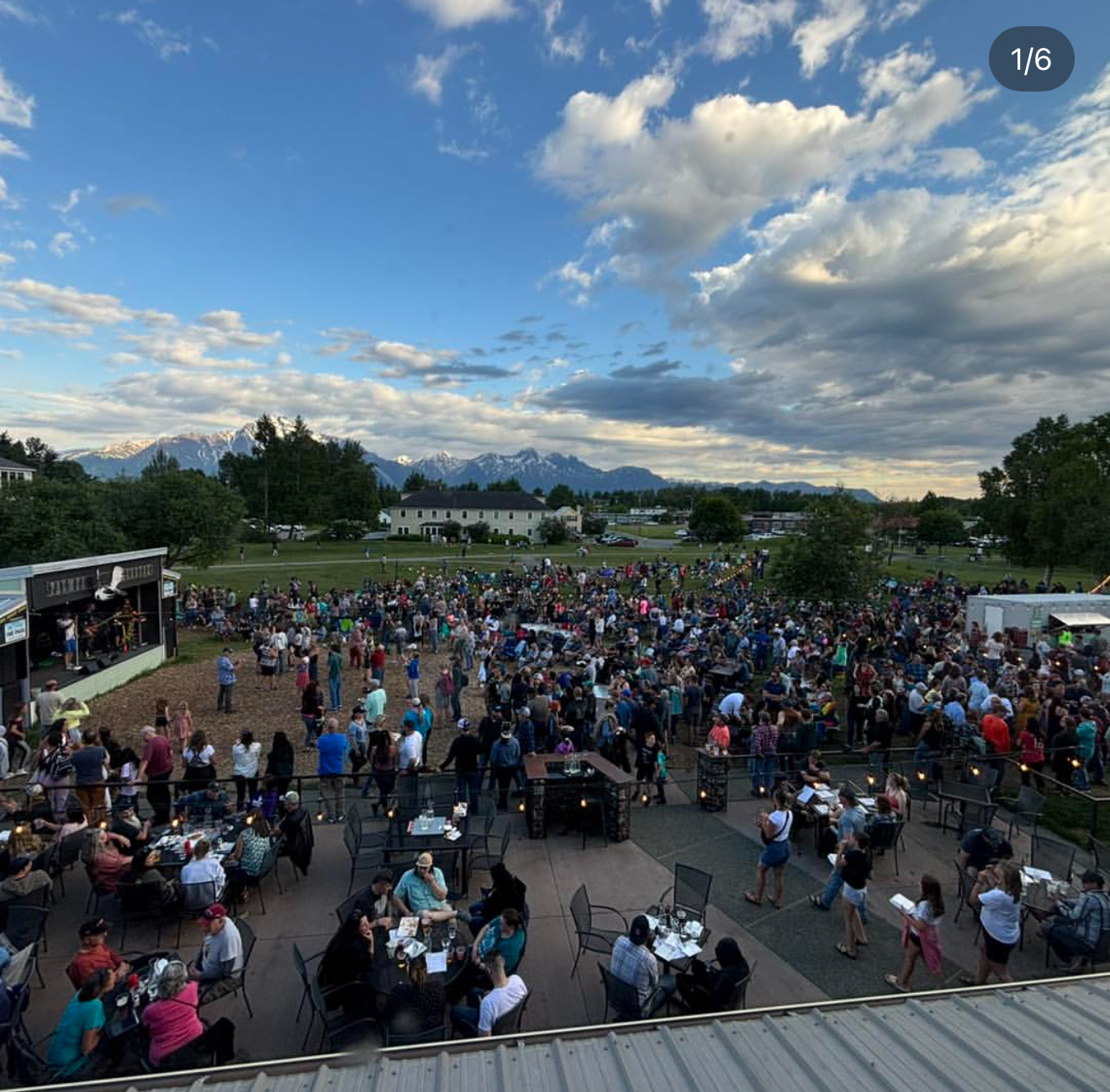
Outdoor concert and mountain views at Palmer Alehouse in Palmer Alaska
Live music, mountain views, long summer evenings, and community events make Palmer Alehouse feel uniquely Alaskan.

Why Places Like Palmer Alehouse Matter

When people think about buying a home, they often focus on square footage, garages, bedrooms, views, lot size, or commute times.

And obviously, those things matter.

But what often matters even more long-term is lifestyle.

The places you regularly go. The restaurants you bring friends to. The coffee shops you stop at. The hiking trails nearby. The atmosphere of a town. The feeling of community.

Places like Palmer Alehouse help create the personality of Palmer itself.

And one of the underrated advantages of living in Palmer is having locally owned spots like this just minutes from home while still being surrounded by some of the most beautiful scenery in Alaska.

Final Verdict: 5/5 Stars

Moose Horn 5 star

Explore The Mat-Su Valley

Thinking About Living In Palmer Or The Mat-Su Valley?

One of the best parts about living in the Mat-Su Valley is the balance of community, scenery, recreation, and lifestyle. From Palmer’s mountain views and local restaurants to lakeside living in Big Lake and quieter rural properties in Willow or Sutton, the Valley offers a little bit of everything Alaska is known for.

May 17, 2026

Hiking Hatcher Pass: Why Living In Palmer, Alaska Feels Like Having A National Park In Your Backyard

Palmer Alaska Lifestyle

Hiking Hatcher Pass: Why Living In Palmer Feels Like Having A National Park In Your Backyard

Alpine lakes, old mining trails, mountain views, wildflowers, ridgelines, and enough scenery to make your camera roll beg for mercy — Hatcher Pass is one of the best parts of living near Palmer, Alaska.

There are places you visit for a weekend, and there are places that quietly change your definition of what “normal life” should feel like.

Hatcher Pass is the second kind.

If you live in Palmer, Alaska, one of the greatest mountain playgrounds in the state is basically sitting in your backyard like it is no big deal. Which, if we are being honest, is a little absurd. In most places, people drive six hours, book overpriced cabins, fight crowds, and pretend they are “escaping into nature.” In Palmer, you can finish your coffee, throw hiking boots in the truck, and be climbing into alpine tundra before your playlist has even figured out what mood you are in.

That is part of what makes living in Palmer so unique. You are not just buying a house. You are buying proximity to experiences people literally fly across the world to have.

And Hatcher Pass delivers those experiences in ridiculous abundance.

Jagged mountain peaks. Alpine lakes that look fake in the best possible way. Wildflowers. Historic mining ruins. Berry picking. Waterfalls. Endless ridgelines. Trails ranging from “pleasant family walk” to “why are my lungs negotiating with me right now?”

Hatcher Pass has all of it.

Why Hatcher Pass Is Special

Mountains, History, Trails & Ridiculous Alaska Beauty

Hatcher Pass sits in the Talkeetna Mountains between Palmer and Willow and is one of Southcentral Alaska’s most iconic recreation areas. The region combines dramatic alpine terrain, historic mining history, accessible hiking, massive scenic views, backcountry recreation, wildlife, alpine lakes, and year-round adventure.

Unlike some outdoor destinations that require a helicopter, a guide, three emergency snacks, and questionable life choices, many Hatcher Pass hikes are surprisingly accessible. You can go from “let’s take the kids on an easy scenic hike” to “I wonder if this ridge counts as mountaineering” within the same afternoon.

1. Reed Lakes Trail

If Hatcher Pass has a celebrity trail, Reed Lakes is probably it. And honestly, the hype is deserved.

Reed Lakes is one of the most visually impressive hikes in Southcentral Alaska. The trail gradually climbs through alpine valleys, mining remnants, waterfalls, massive boulder fields, and eventually into turquoise alpine lakes tucked beneath jagged mountain peaks.

The first time many people see Lower Reed Lake, there is usually a moment of silence followed by, “Okay… this does not even look real.” And that is before Upper Reed Lake.

View Reed Lakes Trailhead
Alaska mountain hiking trail similar to Reed Lakes in Hatcher Pass
Reed Lakes is known for alpine scenery, dramatic peaks, and serious “how is this real?” energy.

Why It Is Worth It

  • Alpine lakes
  • Waterfalls
  • Massive mountain scenery
  • Boulder scrambling
  • Wildflowers
  • Backpacking opportunities
  • Historic mining remnants

Honest warning: the boulder section is not messing around. Some people arrive expecting a casual walk and leave questioning several life decisions and at least one knee joint. But the payoff is enormous.

2. Gold Mint Trail

Gold Mint feels different from Reed Lakes. Where Reed Lakes punches you in the face with alpine drama, Gold Mint slowly unfolds into one of those broad Alaska valleys that makes you feel very small in a very good way.

The trail follows an old mining road into the Mint Valley and is one of the more approachable long-distance hikes in the region. It is scenic, peaceful, easier to navigate than some steeper alpine routes, great for trail running, and excellent for backpacking.

View Gold Mint Trailhead
Wide Alaska mountain valley similar to Gold Mint Trail in Hatcher Pass
Gold Mint Trail gives you big valley views without immediately demanding your soul as payment.

What Makes Gold Mint Great

  • Broad alpine valley scenery
  • More gradual terrain than many alpine hikes
  • Excellent backpacking potential
  • River crossings and alpine meadows
  • Wildlife viewing
  • Great option for longer day hikes

Realistic Alaska note: bring bug spray. This is Alaska. The mosquitoes have unionized.

3. April Bowl / Hatch Peak

April Bowl is wildly popular for one simple reason: the views-to-effort ratio is absurd.

The trail climbs directly above Hatcher Pass and quickly rewards hikers with alpine lakes, ridgelines, panoramic valley views, and some of the best scenery in the region for the distance involved. If Reed Lakes is the all-day epic, April Bowl is the “let’s go have an incredible evening hike after dinner” option.

Which is another underrated part of living in Palmer: you can casually do things that would count as bucket-list experiences almost anywhere else.

View April Bowl Trailhead
Alpine ridgeline hiking similar to April Bowl in Hatcher Pass Alaska
April Bowl is short, steep, scenic, and occasionally humbling.

Why It Is A Local Favorite

  • Quick alpine access
  • Ridgeline views
  • Glacial lake scenery
  • Excellent photography
  • Wildflowers and berry picking later in the season
  • Big payoff without an all-day commitment

Local truth: if you hike this during peak summer, you will probably hear at least one person breathing like they are fighting a medieval dragon halfway up the hill. Respectfully, it may also be you.

4. Gold Cord Lake

Not every hike needs to become a spiritual endurance test.

Gold Cord Lake is one of the best easier alpine hikes in Hatcher Pass and a fantastic option for families, visitors, newer hikers, casual evening adventures, or anyone who still wants incredible scenery without sacrificing their knees to the mountain gods.

The trail begins near historic Independence Mine and climbs to a beautiful alpine lake tucked beneath rocky mountain terrain. You can also pair the hike with a walk through Independence Mine afterward, which gives the entire area an incredibly unique historic feel.

View Gold Cord Lake Trailhead
Alpine lake and mountain hiking similar to Gold Cord Lake in Hatcher Pass
Gold Cord Lake is a great reminder that not every beautiful hike needs to ruin your legs.

Why Gold Cord Lake Is Worth It

  • Alpine lake views
  • Historic mining surroundings
  • Fast scenic payoff
  • Great option for visitors
  • Family-friendly compared to longer Hatcher Pass hikes
  • Excellent photography

Living In Palmer Means This Becomes Normal

This is the part people outside Alaska sometimes struggle to understand. For locals, this becomes everyday life.

Living in Palmer means evening mountain hikes after work, spontaneous trail runs, berry picking weekends, quick scenic drives through Hatcher Pass, sunrise hikes, wildlife sightings, and alpine lakes becoming part of your normal routine.

That changes your lifestyle. It changes weekends. It changes how your kids grow up. It changes stress levels. There is something profoundly different about living near wild places that are still genuinely wild.

And Palmer gives you access to that lifestyle while still maintaining neighborhoods, schools, shopping, restaurants, commuting access, community, and real infrastructure. It is one of the reasons so many people fall in love with the Mat-Su Valley.

The Seasons In Hatcher Pass

One of the coolest parts about Hatcher Pass is how dramatically it changes throughout the year.

Summer

Wildflowers, hiking, midnight sunlight, alpine lakes, backpacking, and green valleys.

Fall

Yellow tundra, berry picking, crisp air, early snow on peaks, and incredible photography.

Winter

Backcountry skiing, snowboarding, snowmachining, and frozen mountain landscapes.

Spring

Snowmelt, waterfalls, longer daylight, and trail conditions that may or may not be mud with ambition.

Hiking Tips

A Few Realistic Alaska Reminders

  • Weather changes fast. Bring layers, even when the day starts beautiful.
  • Trail conditions vary. Snow can linger late into summer depending on the year.
  • Bring bear spray. It is Alaska. Enough said.
  • Start early. Popular trails like Reed Lakes can get busy during peak season.
  • Respect the area. Pack out trash, stay on trail, respect wildlife, and treat historic mining sites with care.

Hatcher Pass Is More Than Recreation

People often think outdoor access is just “something nice nearby.” But in reality, it affects mental health, family life, daily routines, exercise, stress, social life, and long-term happiness.

There is a reason people who move to Palmer often stay. The combination of space, scenery, mountains, trails, community, and accessibility creates a lifestyle that is hard to replicate elsewhere.

And Hatcher Pass is one of the crown jewels of that lifestyle.

Considering Buying In Palmer?

One of the best parts of living in Palmer is having places like Hatcher Pass practically in your backyard. If you are considering buying a home in Palmer or elsewhere in the Mat-Su Valley, explore our local community pages below.

Whether you are relocating, upgrading, investing, or simply looking for a lifestyle with more mountains and fewer traffic lights, the Mat-Su Valley offers something genuinely special.

Talk With James
Posted in Education, Exploring, hiking
May 15, 2026

Anchorage Well and Septic Guide

James Cash Real Estate

Anchorage Well & Septic Guide For Home Buyers And Sellers

Buying or selling a home with a private well or septic system in Anchorage requires a little more due diligence. Here is what to know before you write an offer, accept an offer, or get surprised during closing.

Why Wells And Septic Systems Matter In Anchorage Real Estate

Not every Anchorage-area home is connected to public water and sewer. Depending on location, lot size, age of construction, and neighborhood infrastructure, some properties may rely on a private well, an on-site septic system, or both.

This is especially important in areas like Anchorage Hillside, Bear Valley, Rabbit Creek, Potter Valley, parts of Eagle River, Chugiak, Peters Creek, and other properties outside denser municipal utility service areas.

For buyers, this means the property is not just a house. You are also buying responsibility for the systems that provide water and handle wastewater. For sellers, it means preparation matters. A well or septic issue discovered late in the transaction can create stress, delays, renegotiation, or even put the sale at risk.

The Short Version

Wells and septic systems are manageable, common, and normal in many Anchorage-area properties — but they need to be reviewed carefully. The goal is not to panic. The goal is to understand the system, confirm compliance where required, evaluate condition, and negotiate intelligently.

What Is A Private Well?

A private well is a water source located on or serving the property. Instead of receiving water from a public utility system, the property draws water from the ground through a well.

In Anchorage, a new well generally requires a permit through the Municipality of Anchorage On-Site Water and Wastewater Section. The Municipality states that a new well permit requires a site plan and staff review for compliance with Anchorage Municipal Code. :contentReference[oaicite:0]{index=0}

For buyers, the major questions are usually:

  • Is the well permitted and documented?
  • Where is it located?
  • How old is it?
  • What is the well flow?
  • Has the water been tested?
  • Are there known quality issues?
  • Is the well properly separated from septic components and contamination sources?

The Alaska Department of Environmental Conservation notes that private well owners should be careful when selecting contractors because Alaska does not specifically certify well contractors for well construction, even though contractors and well service companies are required to have a general or subcontractor license. :contentReference[oaicite:1]{index=1}

What Is A Septic System?

A septic system is an on-site wastewater disposal system. Instead of sending wastewater to a public sewer system, the property treats and disposes of wastewater on-site.

The Municipality of Anchorage describes a typical on-site wastewater system as usually consisting of a septic tank and a subsurface disposal field. The septic tank separates solids from liquids, while the disposal field allows treated effluent to disperse into the soil. :contentReference[oaicite:2]{index=2}

Septic systems are not automatically bad. In many Alaska areas, they are normal. But they do require maintenance, proper design, suitable soils, and enough usable land area.

When buying a home with septic, pay attention to:

  • System age
  • Tank size
  • Number of bedrooms the system is approved for
  • Maintenance and pumping history
  • Drainfield location
  • Signs of failure or saturation
  • Required inspection or approval documents
  • Whether the system matches current property use

What Is A COSA?

In Anchorage real estate, one of the most important terms you may hear is COSA, which stands for Certificate of On-Site Systems Approval.

The Municipality of Anchorage states that a COSA is issued by the MOA and serves as confirmation that the well and/or septic system serving a structure have been inspected or tested by a professional engineer and found to comply with applicable MOA standards. :contentReference[oaicite:3]{index=3}

The MOA’s 2025 COSA guidelines state that, since August 18, 1998, a COSA is required for title transfers within the Municipality of Anchorage involving properties served by an on-site water supply system and/or on-site wastewater disposal system, with limited exceptions such as transfers between spouses or to a family trust. :contentReference[oaicite:4]{index=4}

For buyers and sellers, this matters because a COSA can become a major closing timeline item. If the system does not pass, repairs, engineering review, additional testing, or upgrades may be needed before closing.

What Buyers Should Ask Before Writing An Offer

If you are buying a property with a well or septic system, you do not need to be afraid of it — but you do need to be informed.

Before writing an offer, ask:

Well Questions

  • Is there a private well?
  • Is the well documented?
  • Has water quality been tested recently?
  • Is there a recent well flow test?
  • Are there treatment systems?
  • Any known seasonal issues?

Septic Questions

  • Is there an on-site septic system?
  • When was it last pumped?
  • How old is the system?
  • Is there a current COSA?
  • How many bedrooms is it designed for?
  • Any prior issues or repairs?

What Sellers Should Do Before Listing

If you are selling a home with a well or septic system, preparation can prevent major headaches.

A seller should consider gathering:

  • Existing COSA documents
  • Septic pumping records
  • Well log or well documentation
  • Water treatment information
  • Repair or maintenance receipts
  • Any engineering reports or prior permits
  • Known system disclosures

A permit is required before installing, upgrading, or modifying an on-site septic system within Anchorage, and the MOA states that the design and inspection must be performed by a State of Alaska registered civil or environmental engineer. :contentReference[oaicite:5]{index=5}

The earlier you know the status of your well and septic system, the more control you have over the transaction.

Common Issues That Can Come Up

Most well and septic issues are not automatically deal-killers, but they do need to be understood. Some problems are minor. Others can be expensive or time-sensitive.

Water Quality

Some wells may show bacteria, arsenic, iron, hardness, odor, staining, sediment, or other water quality concerns. Some issues may be treatable with filtration or treatment systems.

Low Flow

A well flow test may reveal whether the well produces enough water for normal household use. Low-flow wells require careful evaluation and sometimes storage or other solutions.

Septic Failure

Warning signs may include sewage odors, slow drains, wet or unusually green areas near the drainfield, backups, or system components that are damaged or failing.

Documentation Problems

Sometimes the issue is not that the system is failing — it is that records, permits, prior approvals, or system details are missing or incomplete.

How Wells And Septic Affect Negotiations

Well and septic findings can become negotiation points in a real estate transaction. The key is to separate normal system ownership responsibilities from material problems that affect value, safety, financing, or closing.

A buyer may reasonably ask questions or negotiate around:

  • Failed water quality tests
  • Insufficient well flow
  • Failed septic inspection
  • Missing required approval documents
  • Systems not sized for the represented bedroom count
  • Known leaks, backups, or system damage
  • Required work needed for transfer or financing

A seller, on the other hand, should not panic just because a buyer asks questions. The goal is to respond with documentation, professional evaluation, and practical solutions.

Negotiation Strategy

The strongest strategy is not to overreact. Get the facts, understand the true cost and risk, determine what is required to close, and negotiate from a position of clarity.

Why This Matters For Anchorage Hillside, Eagle River, Chugiak And Peters Creek

In more urban parts of Anchorage, public water and sewer may be common. But in hillside, rural-residential, larger-lot, and outlying areas, wells and septic systems may be part of normal property ownership.

This is especially relevant for buyers looking for:

  • Larger lots
  • More privacy
  • Mountain views
  • Custom homes
  • Luxury properties
  • Rural-residential settings
  • Homes outside dense utility corridors

In these areas, due diligence becomes even more important because the land, drainage, soils, slope, system location, access, and maintenance history can all matter.

Quick Buyer Checklist

  • Ask whether the home has public utilities, private well, septic, or both.
  • Request available well, septic, permit, pumping, and COSA documentation.
  • Review inspection rights and timelines carefully.
  • Confirm who is responsible for required testing or approvals.
  • Understand whether findings could affect financing or closing.
  • Use qualified professionals when evaluating system concerns.

Quick Seller Checklist

  • Locate your current COSA, if available.
  • Gather septic pumping and maintenance records.
  • Find your well log or well documentation if possible.
  • Disclose known system issues honestly.
  • Consider early evaluation before listing if records are missing or concerns exist.
  • Do not wait until the week of closing to deal with well or septic questions.

Final Thoughts

Wells and septic systems are common in many parts of Anchorage and surrounding areas. They should not automatically scare buyers away, and they do not automatically make a property difficult to sell.

But they do require strategy.

For buyers, the goal is to understand what you are purchasing and avoid expensive surprises. For sellers, the goal is to prepare early, provide documentation, and prevent avoidable delays.

The most important thing is to work through the process calmly and intelligently. Get the right information, use qualified professionals, understand what is required, and negotiate based on facts — not fear.

Buying Or Selling A Home With Well Or Septic In Anchorage?

If you are looking at a property with a private well, septic system, or COSA requirement, having the right guidance matters. I can help you understand the process, ask better questions, and protect your interests through the transaction.

Contact James Cash
Posted in Education
May 13, 2026

May 2026 Alaska Real Estate Market Update - Anchorage, Eagle River, Palmer and Wasilla

2026 Alaska Housing Market Report

Anchorage, Eagle River, Palmer & Wasilla Real Estate Market Update

The Alaska housing market continues to evolve in 2026. Despite elevated interest rates, buyer demand remains surprisingly resilient across Anchorage, Eagle River, Palmer, and Wasilla. Inventory, pricing strategy, days on market, and negotiation leverage are shifting differently depending on area and price range — making local market knowledge more important than ever.

The Market Has Not Frozen

One of the biggest misconceptions entering 2026 was the belief that higher mortgage rates would completely stall the housing market. While the market has certainly changed from the ultra-aggressive pandemic years, the data tells a very different story than what many expected.

Buyers have not disappeared. Instead, many have adapted. Families still need more space. Military relocations continue. Investors are still active. People still get married, divorced, transferred, promoted, downsized, and relocated. Life continues regardless of interest rates, and real estate remains tied closely to life events.

What has changed is buyer behavior. Buyers today are generally:

  • More analytical
  • More payment conscious
  • More selective on condition
  • More focused on long-term value
  • Less emotional than 2020-2022
  • More patient during negotiations

At the same time, sellers are also adjusting. The days of simply putting a sign in the yard and receiving ten offers within hours are less common in many price ranges. Presentation, pricing strategy, condition, photography, marketing quality, and negotiation skill matter significantly more today.

The result is a market that feels healthier and more balanced than the extreme volatility seen over the last several years.

2026 Key Market Statistics

Anchorage

Avg Sold Price: $544,764

Inventory: 0.89 Months

Sale/List Ratio: 99.23%

Avg DOM: 32 Days

Eagle River

Avg Sold Price: $519,883

Inventory: 0.97 Months

Sale/List Ratio: 100.26%

Avg DOM: 22 Days

Palmer

Avg Sold Price: $496,883

Inventory: 1.93 Months

Sale/List Ratio: 99.65%

Avg DOM: 43 Days

Wasilla

Avg Sold Price: $458,343

Inventory: 1.97 Months

Sale/List Ratio: 99.59%

Avg DOM: 49 Days

Anchorage: Still Extremely Competitive

Anchorage continues to show one of the strongest supply-demand imbalances in Alaska. Overall inventory remains historically tight, especially in the mid-price ranges between roughly $350,000 and $700,000.

One of the most important statistics in the Anchorage market right now is overall inventory level. Anchorage currently sits at less than one month of inventory overall, which still strongly favors sellers in many segments.

In real estate economics, a balanced market is generally considered around 4-6 months of inventory. Anchorage remains well below that threshold.

Some of the strongest-performing price ranges currently include:

  • $300k-$450k
  • $450k-$600k
  • Move-in-ready family homes
  • Properties near strong commute routes
  • Updated homes with modern finishes

Interestingly, the luxury market above $1M is also showing signs of increased activity compared to previous years, though inventory is beginning to rise at the higher price points.

Luxury buyers remain active, but they are significantly more selective. Condition, architecture, lot quality, privacy, views, and presentation quality matter dramatically more at higher price points.

Buyers in Anchorage today are still paying very close to asking price overall, averaging over 99% of list price. That is an incredibly strong indicator that demand remains healthy. :contentReference[oaicite:0]{index=0}

Eagle River: One Of Alaska’s Strongest Seller Markets

Eagle River continues to stand out as one of the strongest and most competitive residential markets in Southcentral Alaska.

Inventory remains extremely limited, and average sold price compared to list price is actually over 100%, suggesting multiple-offer situations are still occurring in certain segments. :contentReference[oaicite:1]{index=1}

Several factors continue driving Eagle River demand:

  • Military relocation demand from JBER
  • Strong school appeal
  • Mountain views and outdoor lifestyle
  • Community-oriented atmosphere
  • Relative commute convenience to Anchorage
  • Limited buildable land in established areas

Homes that are clean, updated, and properly priced are still moving quickly in Eagle River, particularly in the $400k-$700k range.

Interestingly, Eagle River also appears to be maintaining stronger pricing power than many expected despite interest rate pressure.

This is likely because many Eagle River buyers are purchasing for lifestyle reasons rather than purely investment reasons. Buyers are prioritizing community feel, lot quality, family functionality, and access to outdoor recreation.

Palmer & Wasilla: More Inventory, More Negotiation

The Mat-Su Valley continues to grow rapidly, but Palmer and Wasilla are behaving somewhat differently than Anchorage and Eagle River in 2026.

While demand remains strong overall, inventory levels are noticeably higher in the Valley compared to Anchorage.

Palmer currently sits around 1.93 months of inventory, while Wasilla is approximately 1.97 months. That is still technically a seller-favored market, but buyers generally have more options and slightly more negotiating room than they do in Anchorage. :contentReference[oaicite:2]{index=2} :contentReference[oaicite:3]{index=3}

One major trend in the Valley is continued demand for:

  • Acreage properties
  • Shops and detached garages
  • New construction
  • Multi-generational layouts
  • Properties with privacy
  • Functional land use

However, buyers in the Valley are also becoming more price-sensitive as commute costs and interest rates remain elevated.

This means strategic pricing matters more than ever. Overpricing a property in Palmer or Wasilla is much riskier today than it was several years ago.

The data shows homes in Wasilla are taking closer to 49 days on average to sell, compared to roughly 22 days in Eagle River. That is a substantial difference in buyer pace and competition. :contentReference[oaicite:4]{index=4}

Buyers today are carefully comparing:

  • Condition
  • Commute
  • Utility costs
  • Well and septic systems
  • Road maintenance
  • Snow removal
  • Internet access
  • Resale potential

The Valley market remains healthy overall, but buyers are more analytical and less emotional than during the height of the market frenzy.

What About Interest Rates?

Mortgage rates remain one of the biggest topics in real estate conversations today.

Higher rates have unquestionably impacted affordability. Monthly payments are significantly higher than they were several years ago, even when home prices remain relatively similar.

However, buyers appear to be adapting in several ways:

  • Purchasing slightly smaller homes
  • Moving farther from city centers
  • Using rate buydowns
  • Adjusting expectations
  • Accepting that waiting may not dramatically improve affordability

An important realization many buyers are having is this:

You can refinance an interest rate later. You cannot go back in time and buy at yesterday’s prices.

That mindset shift appears to be helping sustain buyer activity despite higher borrowing costs.

What Sellers Need To Understand In 2026

The market is still strong, but sellers cannot rely solely on low inventory anymore.

Today’s buyers are more educated, more cautious, and more comparison-driven.

That means successful sellers are focusing heavily on:

  • Professional photography
  • Strong staging and presentation
  • Pricing strategy
  • Inspection preparation
  • Marketing quality
  • Video and social media exposure
  • Negotiation positioning

Homes that feel turnkey, updated, and emotionally appealing continue to perform best.

Meanwhile, homes that are overpriced or poorly presented are sitting longer and requiring price reductions more often than they did several years ago.

Pricing psychology matters enormously in today’s market.

A properly positioned listing creates urgency and leverage. An overpriced listing often creates hesitation and market fatigue.

2026 Luxury Market Trends

The luxury segment across Anchorage, Eagle River, Palmer, and Wasilla is becoming increasingly interesting.

Inventory above $800k and especially above $1M has increased noticeably compared to lower price ranges.

That does not mean luxury homes are not selling. They absolutely are. However, luxury buyers are highly selective and expect significantly more value, quality, and presentation.

Today’s luxury buyer expects:

  • Cinematic photography and video
  • Architectural quality
  • Thoughtful design
  • Functional layouts
  • Updated finishes
  • Lifestyle appeal
  • Strong presentation online
  • Privacy and land usability

Luxury marketing today is no longer just listing a home on the MLS. Positioning and presentation have become critical.

Final Thoughts

Overall, the Alaska housing market remains remarkably resilient in 2026.

Inventory remains historically low in many segments, especially in Anchorage and Eagle River. Buyers are still active despite interest rates. Sellers are still receiving strong prices when homes are properly positioned and marketed.

At the same time, the market is becoming more strategic.

This is no longer a market where simply existing guarantees success. Pricing, preparation, negotiation, communication, marketing quality, and local knowledge matter significantly more today than they did during the extreme frenzy years.

Whether you are buying, selling, investing, relocating, or simply trying to understand where the market is heading, having accurate local information matters.

Every neighborhood, price range, and property type is behaving differently right now — and understanding those nuances is often the difference between a smooth transaction and a costly mistake.

Questions About The Alaska Market?

If you’re considering buying or selling in Anchorage, Eagle River, Palmer, Wasilla, or the Mat-Su Valley, feel free to reach out. Real estate decisions are local, and strategy matters more than ever in today’s market.

Contact James Cash
Jan. 27, 2024

Understanding Interest Rates

Posted in Education
Feb. 21, 2020

Buying a Duplex in Anchorage, Alaska


Thinking about buying a home in Anchorage, Alaska? - But you also want to invest in real estate, AKA the best investment vehicle ever?


Great! So you’re buying a duplex!


A few things to note:

Buying a duplex is a pseudo investment.

A duplex doesn’t typically cash flow, especially when you’re living in it at first, unless you put a very large amount down.


If it doesn’t cash flow, it’s not classified as an investment, but rather a liability; something that costs you money to own.


Good news is:

You’re collecting rental income from one unit, so you’ll be paying a lot less than even half your mortgage every month (typically).


Also, some day when you pay down your mortgage, you can refinance, and it WILL become an asset over time.


Still not convinced?


Unlike buying a Fourplex or even larger units, duplexes often offer more conveniences of a single family home, such as one’s with garages, great finishes and construction and beautiful open concepts.


AND, unlike a single family, you won’t have to solely rely on JUST yourself to pay the mortgage every month.


Getting into a financial bind? GO live with friends while you FULLY rent out you’re duplex until your back on your feet.


These are just a few of the great benefits of buying a duplex.

Posted in Education
Feb. 19, 2020

Anchorage Duplex Statistics

Hi, this is James Cash with HERO Realty Group, at Real Estate Brokers of Alaska.


We are taking a look at the market stats for the Anchorage area, duplexes only.


Healthy number of closed units, with a relatively low day on market just shy of two months.


As you can see by the median days on market of closed duplexes, it’s obvious that the unsold duplexes were either not priced realistically, or had conditional issues, such as deferred maintenance just to name one, that prevented their sale.


With interest rates currently so low, it’s a no brainer that now is a great time to list your duplex at a good price, and expect a quick sale!


For more information on buying OR selling duplexes, stay tuned as later this week, as Cortney Foos explains more.

Posted in Education
March 9, 2019

Anchorage Residential Real Estate Market Weekly Update #22

Anchorage Alaska Real Estate Market Stats

March 2, 2019

Anchorage Residential Real Estate Market Weekly Update #21

Anchorage real estate economy statistics

Feb. 28, 2019

The 3 Times Buyers Pay Money

When Buyers Pay Money 

Thinking about buying a home in Anchorage, Eagle River or the Valley? Watch this video to hear more about the three times you'll pay money when you buy your next home.

Watch the video to hear our full discussion, but in short they are:

  1. Earnest Money
  2. The Home Inspection
  3. The Closing Table - Pre-paids and Closing Costs